





Card attaching has become one of the more consistent capital investments in high-volume mail production over the last several years. Companies that once outsourced card fulfillment or ran it on a dedicated stand-alone system are consolidating those workflows into their existing inserting platforms. The reasons are practical, and they tend to compound over time.
If you are evaluating whether an integrated card attaching system belongs in your operation, here is what is driving the decision for operations like yours.
-
Card Volume Is Growing Across Nearly Every Vertical
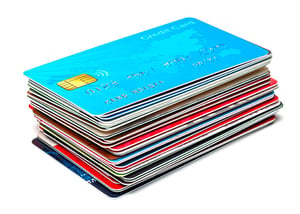
Insurance cards, bank cards, driver's licenses, gift cards, loyalty cards, and co-branded payment cards are all moving through the mail at increasing volume. Healthcare organizations are reissuing cards more frequently as plan changes accelerate. Financial institutions are replacing physical cards on tighter turnaround schedules. Government agencies are producing more credentialed documents in-house.
The demand is there. The question is whether your production floor is set up to handle it without creating a separate workflow bottleneck.
-
Dedicated Systems Create Unnecessary Operational Complexity
Running card fulfillment on a stand-alone system means managing a separate piece of equipment, separate operators, separate maintenance contracts, and separate job setups. When that system sits idle between card jobs, it is still consuming floor space and service budget.
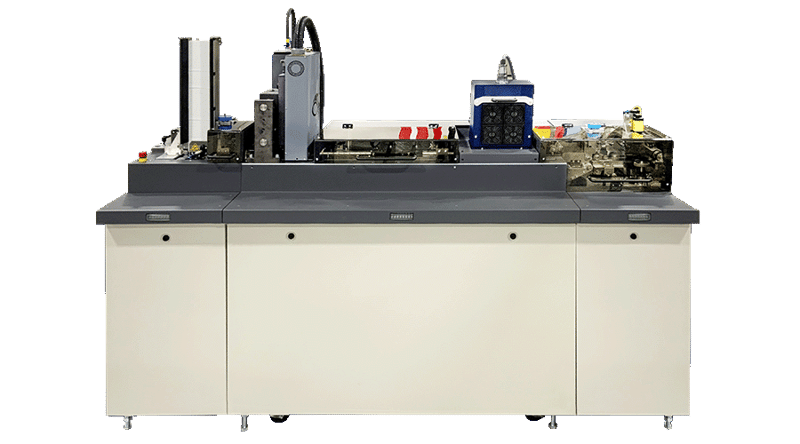
Integrated card attaching solves this by building the capability directly into your inserting platform. When you are not running card applications, the inserter runs standard jobs at full speed. When you are attaching cards, the same operators and the same workflow manage it. You are not adding complexity to your operation. You are consolidating it.
-
Workflow Integration Reduces Labor and Cycle Time
One of the more tangible arguments for integrated card attaching is what it removes from your process. Folding, printing, card attaching, inserting, and sealing can all happen in a single automated pass. That means fewer manual handoffs, fewer points of potential error, and less time between job start and finished mail pieces.
For operations under pressure to meet SLAs on card issuance, particularly in banking and insurance, cycle time is a real constraint. Processing at speeds up to 24,000 cycles per hour, with match verification built in, gives you the high speed throughput and the accuracy controls that high-volume card jobs require.
-
Match Verification Protects Against Costly Errors
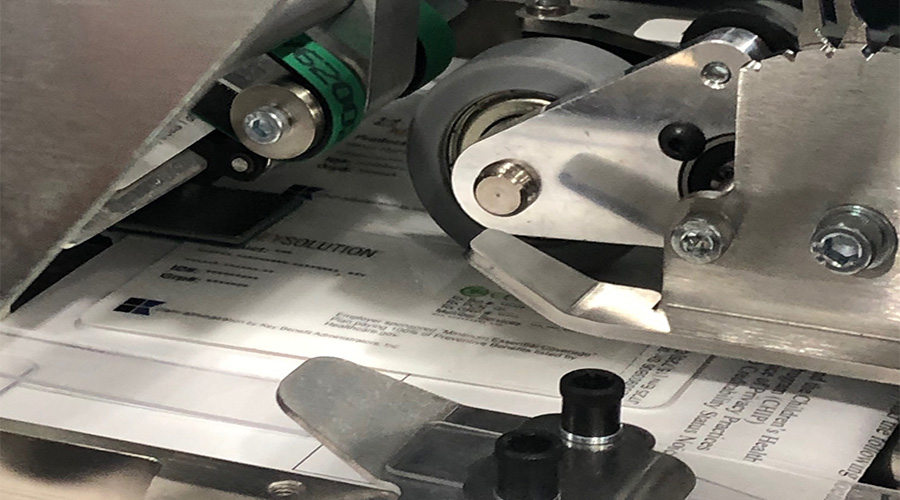
Sending the wrong card to the wrong person is a compliance problem, a customer service problem, and in some verticals, a regulatory problem. Integrated card attaching systems with barcode scanning, OCR, and magnetic stripe verification confirm that the right card is paired with the right carrier before the envelope closes.
Built-in resync on mismatch means the system can recover from a card feed issue without stopping the entire job. That kind of accuracy architecture is not something you can replicate when card attaching is a manual or semi-manual process downstream.
-
The ROI Case Is Straightforward
The consolidation math is usually clear. When you eliminate a dedicated card attaching system, you recover floor space, reduce your maintenance obligations, and lower the labor required to staff and train on a second platform. When you add the ability to bring card applications in-house that were previously outsourced, the revenue case strengthens further.
Integrated card attaching also scales with your existing inserter investment. If you are running an Epic, Evolution, MSE, or MPS platform from BlueCrest, card attaching capability can be added to what you already own. The modular design means the investment follows your workflow rather than requiring you to build around a new one.
What to Consider Before You Invest
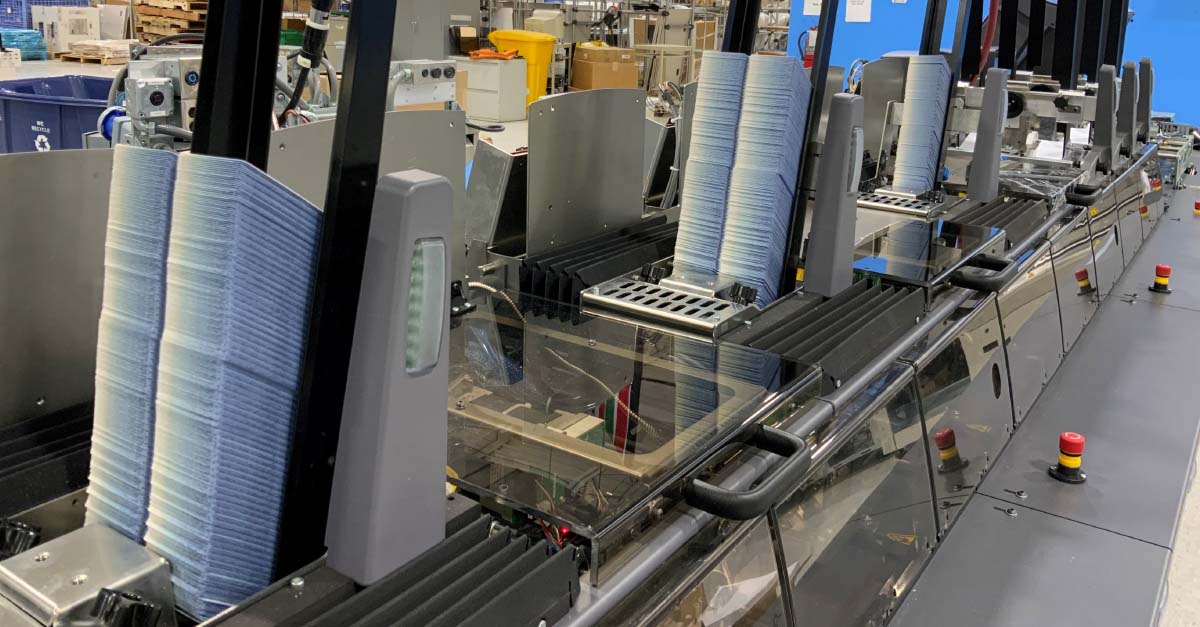
The right configuration depends on your card mix. Tip-on input with in-line printing works well for personalized card applications where variable data matters. Tip-on inline handles flat or folded carriers with multiple card feed stations. The chassis-integrated option is built for the highest cycle speeds and is particularly well suited for pre-folded carrier jobs.
Understanding your job mix, your card types, and your volume peaks will determine which configuration fits your operation. That conversation is worth having before you specify equipment.
If you want to see how integrated card attaching fits your current platform, request a demo or reach out to your BlueCrest representative.


Share article


Justin O'Donnell

0 comments