





The automation conversation in mail processing has shifted from "should we automate?" to "when does the math work?" The answer depends almost entirely on one variable that many organizations overlook: how many shifts you run.
When Should You Automate Mail Processing?
The shift intensity calculation
Consider a representative scenario: a collaborative robot system for mail processing operations with an equipment investment around $300,000. The operator being redeployed to higher-value work might cost roughly $60,000 annually when you include benefits and overhead. Those baseline numbers are straightforward. What changes everything is operational intensity.
A single-shift operation gets 2,000 hours of annual utilization from that equipment. A two-shift operation gets 4,000 hours. Three shifts? 6,000 hours. The equipment cost stays constant, but the return scales directly with utilization.
When you model these scenarios, the payback differences are dramatic:
Single-shift operations in this scenario would generate approximately $37,000 in direct labor savings annually, plus roughly $19,000 in operational improvements from throughput gains, quality enhancements, and workflow optimization. Total annual return: around $56,000. Modeled payback period: 5.3 years.
Two-shift operations would see labor savings jump to approximately $145,000 annually, with similar operational improvements of $19,000. Total return: roughly $164,000. Modeled payback: 1.8 years.
Three-shift operations would generate approximately $225,000 in labor savings, $19,000 in operational improvements, for roughly $244,000 total annual return. Modeled payback: 1.2 years.
The direct labor component scales linearly with shift intensity, while the operational improvements remain relatively constant regardless of how many shifts you run. This is why automation discussions increasingly focus on utilization rates.
Industry context matters
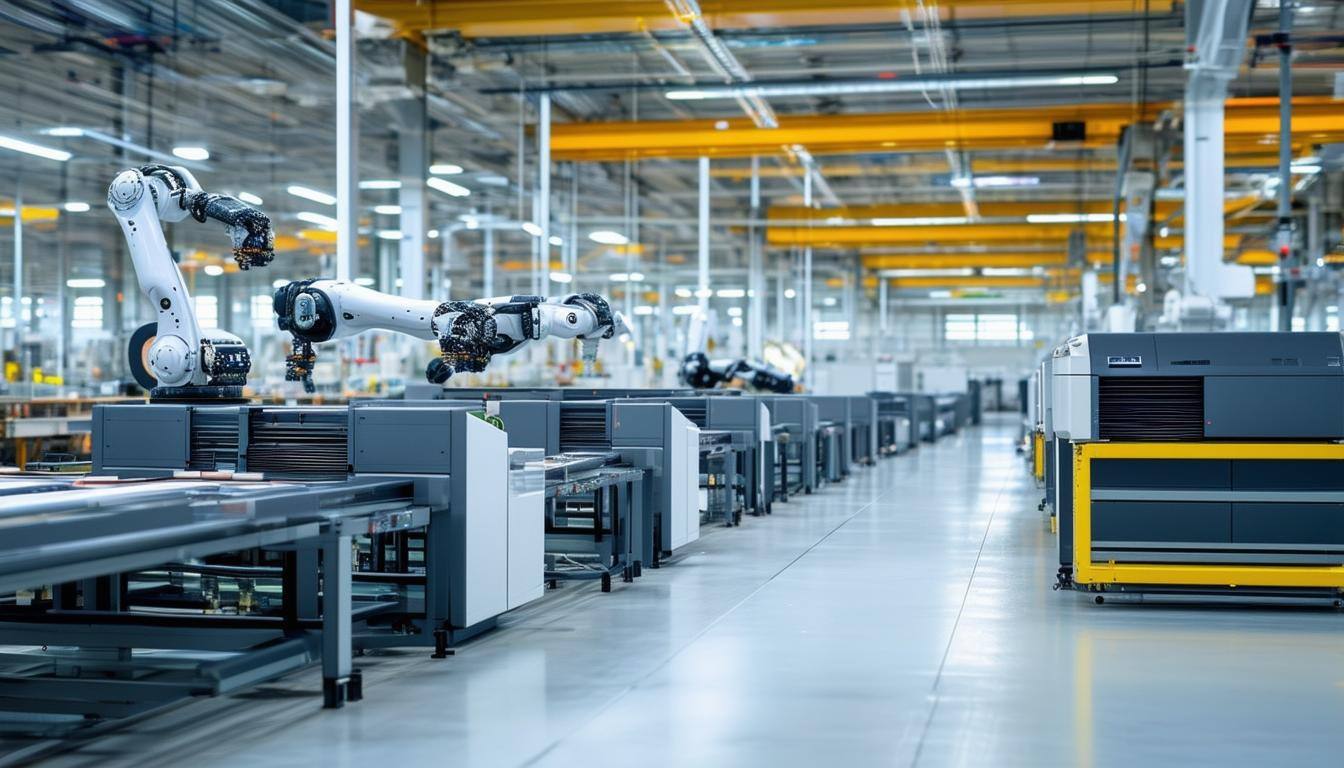
These modeled payback timelines fall within typical industrial automation ranges. Most manufacturing automation implementations achieve ROI within one to three years[1]. Simple robotic solutions for repetitive tasks often pay back in six months to two years. More complex automation systems typically require two to five years for full payback[2].
The mail processing scenarios modeled above track closely with broader manufacturing data. Industrial automation systems generally see payback periods of 12 to 24 months when properly matched to operational requirements[3].
The three-shift scenario at 1.2 years fits comfortably in that range. Two-shift scenarios at 1.8 years remain attractive. Single-shift scenarios at 5+ years sit on the longer end. However, they can still deliver returns across the majority of the equipment's useful life.
How does equipment lifespan change the picture?
Industrial processing equipment like machinery, tools, and industrial robots typically operates for 10 to 20 years with proper maintenance[4]. This matters significantly when evaluating the economics of automation solutions.
In the three-shift scenario above, a 1.2-year payback would mean generating positive returns for roughly 9 to 19 years after payback. The two-shift scenario paying back in 1.8 years would still deliver 8 to 18 years of net positive returns. Even the single-shift scenario paying back in 5.3 years would provide 5 to 15 years of profitable operation.
The equipment doesn't become worthless after payback. It continues generating long-term returns for the majority of its operational life. This fundamentally changes the risk calculation. The question becomes less "can we afford the upfront investment?" and more "can we afford to forego a decade-plus of potential positive returns?"
Hidden variables in the calculation
The roughly $19,000 in operational improvements in the scenarios above deserve closer examination because these benefits often get overlooked in simple payback calculations.
Throughput improvements come from consistent cycle times and the elimination of operator variability. Quality gains result from repeatable processes that don't drift over time. Workflow optimization happens when operators can focus on exception handling rather than routine tasks. Retention improvements stem from removing the physically demanding repetitive work that drives turnover.
These operational benefits don't scale with shift intensity the way direct labor savings do, but they're not trivial. In the modeling above, they represent 34% of total returns for single-shift operations, though that percentage drops as shift intensity increases. The exact mix and magnitude will vary by facility, but the principle holds across implementations.
The labor availability factor
The traditional ROI calculation assumes you can find operators at any price. That assumption no longer holds in many markets. When you can't staff a second or third shift regardless of wage rates, the automation decision shifts from financial optimization to operational necessity.
This changes the calculation in two ways. First, the opportunity cost of not automating becomes the revenue you can't generate from unstaffed shifts. Second, the labor savings component needs to account for positions you can't fill rather than positions you're eliminating.
If you're running one shift because you can only staff one shift, but market demand could support two or three shifts, the foregone revenue becomes part of the automation justification. Those numbers can dwarf the direct labor savings.
 What if the math doesn't work in favor of Automation?
Single-shift operations with low volumes face genuine ROI challenges. A 5+ year payback requires confidence in sustained operation over that timeline. If production volumes are declining, if the product mix is shifting away from mail-intensive processes, or if regulatory changes could disrupt operations within the payback window, the risk calculation changes significantly.
Equipment flexibility matters in these scenarios. Systems that can adapt to different mail formats, handle variable volumes efficiently, and integrate with evolving workflows reduce the risk of stranded capital investment. The upfront cost might be higher, but the ability to respond to changing requirements without replacing entire systems extends the realistic useful life of the investment.
The decision framework
Three questions determine whether automation economics work for a specific operation:
What's your realistic shift intensity over the next three to five years? Not what you run today, but what you could run if labor constraints weren't a factor. This determines your direct return potential.
How stable is your operational outlook? Equipment with a 15 to 20 year lifespan requires confidence that the fundamental business will persist. Major market shifts, technological disruption, or regulatory changes all affect this calculation.
What's your opportunity cost of not automating? If you're capacity-constrained because you can't find operators, the cost of inaction might exceed the cost of investment.
Where this leads
Automation decisions that looked marginal three years ago have become obvious in many markets. The shift happened not because automation got dramatically cheaper, but because labor availability constraints made the alternative untenable. Operations that could previously choose between automation and additional staffing now face a choice between automation and capacity constraints.
The math works differently when the alternative is leaving capacity idle rather than staffing it manually. That's not a theoretical consideration. That's the operational reality facing many mail processing facilities in 2026.
Note on methodology: The shift scenario analysis uses representative modeling based on typical equipment costs, labor rates, and utilization patterns in mail processing operations. These scenarios are designed to illustrate how operational intensity affects automation economics rather than to represent specific customer implementations.
Industry payback period ranges and equipment lifespan estimates are drawn from manufacturing automation research, including studies by industrial automation vendors and manufacturing industry analyses. While these studies encompass broader industrial automation sectors, the fundamental economics of capital equipment utilization, labor cost displacement, and equipment depreciation are applicable across various industrial applications. Individual results and the benefits of automation will vary based on specific operational conditions, labor markets, and implementation details.
References:
[1] Qviro. "Implementation Costs of Industrial Automation." November 2024. https://qviro.com/blog/implementation-costs-industrial-automation/
[2] AIC Automation. "The ROI of Industrial Automation: When Does It Pay Off?" August 2025. https://aic-automation.com/the-roi-of-industrial-automation-when-does-it-pay-off/
[3] Space4Tech. "Artificial Intelligence in Industrial Automation: 2025 Guide." April 2025. https://www.space4tech.net/artificial-intelligence-industrial-automation-2025/
[4] Timly. "Equipment Depreciation Life (Explained & How To Calculate)." October 2024. https://timly.com/en/equipment-manufacturing-machinery-depreciation-life/
Share article


Justin O'Donnell

0 comments